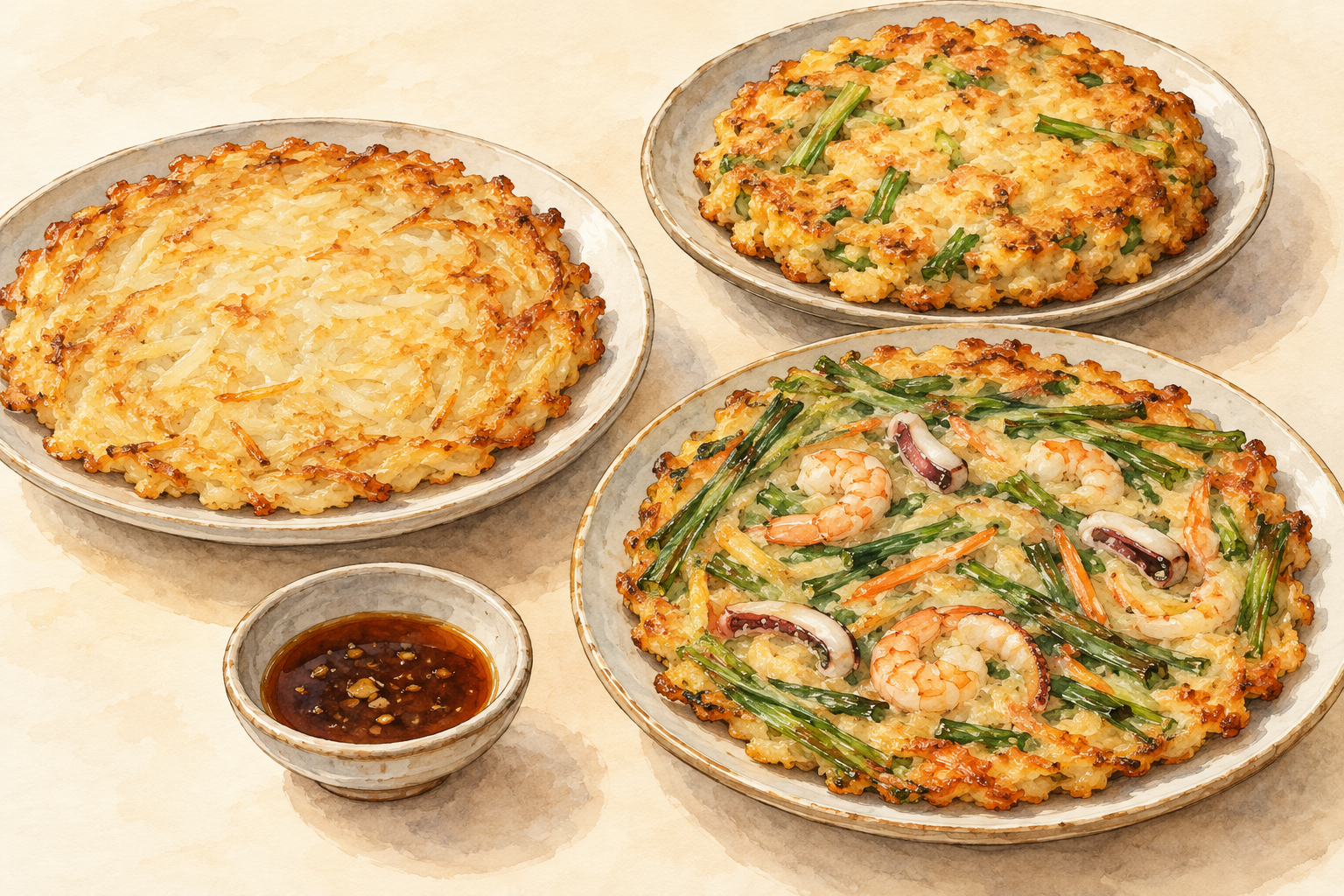
Choose one pancake by texture and filling
In Korea, gamjajeon, bindaetteok and haemulpajeon offer three different starting points: potato chewiness, a substantial bean-based pancake, or seafood with scallions.
This is a focused menu guide, not a list of restaurants or an assumption about what people from any country prefer. Start with a texture you enjoy, then decide which ingredients you want to explore. For a wider choice of meals, use our Korean food guide by taste and texture.
The descriptions below are based on Korea Tourism Organization food entries, checked on 20 October 2026. They describe typical preparations rather than a shop’s current recipe. The potato, mung-bean and pajeon entries date from October 2023; the seafood-pancake entry dates from September 2025. No personal tasting is claimed.
Compare three names before you order
These three Korean menu names identify a useful flavor direction, but they are not complete ingredient lists.
| Menu name | If this sounds appealing | Ask the restaurant |
|---|---|---|
| Gamjajeon · 감자전 | Mild potato flavor with a chewy texture | What is mixed into the potato, and which sauce comes with it? |
| Bindaetteok · 빈대떡 | A thicker, savory mung-bean pancake with vegetables | Does this version contain pork or other animal ingredients? |
| Haemulpajeon · 해물파전 | Seafood and scallions, with crisp edges and a softer middle | Which seafood and batter ingredients are included? |
If you dislike chewy food, do not choose gamjajeon only because potatoes are familiar. If seafood is your favorite part, ask what the kitchen actually uses rather than expecting every piece shown in a menu photograph. Crispness, thickness and oiliness can vary with preparation; the table is a starting point, not a promised result.
Consider gamjajeon for a mild potato option
KTO describes gamjajeon as ground potato mixed with starch and pan-fried, with a mild flavor and chewy texture.
Its potato pancake entry also allows vegetable additions. That makes the name a useful prompt to ask about the kitchen’s version, not a guarantee of a short ingredient list. Ask whether the pancake is plain or mixed and whether the sauce can be served separately.
If you want a small taste before ordering another meal, check the portion first. The name alone does not say whether you will receive a small side dish, several pieces or one large pancake. Do not assume a photo represents the smallest available order.
Choose bindaetteok for a thicker savory pancake
KTO’s bindaetteok description combines ground mung beans with pork, sprouts and bracken, and describes a thicker pancake than other Korean examples.
That preparation may interest you if you prefer a more substantial savory bite. The official mung-bean pancake entry is also a clear reason not to equate a bean-based name with a vegetarian meal.
Ask about the batter already prepared for service. Requesting “no pork” does not establish that the kitchen can make a separate version from an existing mixture. If ingredients cannot be confirmed to meet your needs, choose another meal rather than relying on removing visible pieces.
Choose haemulpajeon when seafood and scallions are the attraction
KTO describes haemulpajeon as a flour-batter pancake with scallions and seafood, contrasting a crisp edge with a soft center.
Its seafood pancake entry gives squid, shrimp and mussels as examples, not a fixed combination at every restaurant. Check which seafood is used and whether any part is substituted. If seafood texture does not appeal to you, a different dish may be a better choice than trying to pick it out.
Do not assume plain pajeon means seafood-free: KTO’s separate green-onion pancake description includes squid and clams. Confirm the preparation rather than relying on the shorter menu name.
Check sauce, portions and dietary requirements separately
Before ordering a Korean pancake, make three checks: the full preparation, the size of one order and the dipping sauce.
A mild-tasting pancake and a chili-containing sauce answer different taste questions. Ask for sauce separately if that helps your preference, but remember it cannot remove ingredients already in the batter. KTO’s haemulpajeon example describes a soy-and-vinegar dipping sauce with chili powder; your restaurant may use a different mixture.
- 어떤 재료가 들어가나요? — What ingredients are in it?
- 소스를 따로 주실 수 있나요? — Could you serve the sauce separately?
- 한 접시는 어느 정도 양인가요? — How large is one plate?
These are ordinary ordering questions, not a medical translation card. For allergies or a prescribed diet, confirm the specific ingredients and cross-contact arrangements required by your clinician’s plan. Ask about sauces and shared preparation as well as visible fillings. A potato or mung-bean base does not establish a gluten-free dish; a vegetable name does not establish vegan preparation or religious certification.
Use our food-allergy restaurant checklist or vegetarian and vegan ordering guide for more detailed preparation. For portions, seating and payment, continue to ordering and eating alone in Korea.
Korean pancake questions
For a first Korean pancake order, these four questions are worth settling before the kitchen starts cooking.
Are these sweet breakfast pancakes?
These examples are savory preparations, not a promise of a breakfast menu. Check the restaurant’s serving hours and version.
Is bindaetteok vegetarian because it is made with beans?
Not necessarily. The KTO example includes pork. Verify the whole preparation with the restaurant.
Can I order one pancake while dining alone?
Ask about the size, minimum order and seating policy. No universal serving size or price was verified.
Is gamjajeon guaranteed gluten-free?
No. Confirm the actual mixture, sauces and preparation arrangements; the dish name is insufficient.
This is independent food-selection information, not medical, legal or financial advice. No restaurant’s ingredients, allergen controls or religious certification are certified by this guide.