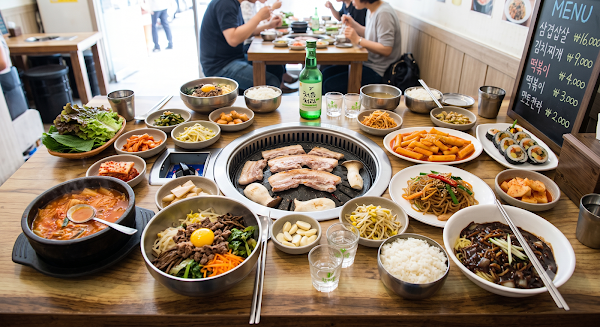
A practical restaurant walkthrough for solo travelers: check the menu and portion rules, choose flavors you enjoy, ask for help and settle the bill.
Before you sit down: one person, one meal?
Start with the menu outside or at the entrance. Look for an individual bowl, plate or set rather than assuming every dish is sized for one. For shared dishes and tabletop barbecue, ask about the minimum order and whether one person can dine. A portion minimum is not the same as a rule banning solo diners.
Try this question: 혼자 식사할 수 있나요? — “Can I eat here alone?” If the answer is unclear, point to the dish and ask how much you would need to order. Choose a different restaurant if the required quantity does not suit your appetite or budget.
For a simple first attempt, look for a menu selling individual rice bowls, noodle bowls or soup-and-rice meals. Read the actual portion and ingredients; the restaurant format alone does not tell you whether a meal is suitable for you.
Choose by taste rather than nationality
Your passport is not a reliable guide to your dinner. Think about flavors and textures you already enjoy, then use the menu to explore something nearby.
- Like sweet-savory meat? Consider bulgogi, then ask how it is served and whether the marinade is spicy.
- Prefer a warm, less chili-forward meal? Look at a clear-broth noodle or soup option. Ask about its stock and whether chili comes separately.
- Enjoy rice and vegetables? Consider bibimbap and ask whether the chili sauce can be served separately. Check meat, egg and seasonings rather than assuming it is vegetarian.
- Like chewy textures? Rice cakes may appeal, but check the sauce before choosing tteokbokki; changing the amount you eat does not change the sauce’s heat.
These are starting points, not fixed spice ratings or dietary guarantees. Recipes differ. If fermented flavors are unfamiliar, try a small portion of a side dish before mixing it into the rest of your meal. Read our Korean food overview for more dishes and our barbecue guide for the tabletop format.
Ordering without guessing
Check whether orders are taken by staff, at a kiosk or through a table screen. Pointing to the menu item can help; confirm the quantity and any compulsory additions before paying. If an ordering device is unclear, ask for help instead of pressing through unfamiliar options.
이거 하나 주세요. means “One of this, please.” 소스는 따로 주세요. means “Please serve the sauce separately.” The second request is useful only when the dish can be prepared that way. A sauce already cooked into a stew cannot simply be removed.
For allergies or strict dietary requirements, explain the specific ingredients and ask about preparation and shared equipment. A picture, a mild-looking broth or a translated dish name cannot establish that a meal is safe, vegan or halal. If staff cannot confirm what you need, choose another option. See our halal food planning guide for the distinctions between restaurant categories.
Water, utensils and side dishes
Korea Tourism Organization’s restaurant guide describes self-service water and side dishes, ordering machines, table call buttons and utensil drawers. Look for these features rather than expecting them at every venue. If you see a call button, use it to ask for assistance; if you do not, politely get a staff member’s attention.
Ask which refills are included before ordering more. Do not assume a paid extra dish is a free side-dish refill. Use any provided serving utensils when sharing food, and follow instructions around hot grills. You can ask for another utensil if chopsticks are difficult for you.
Paying and leaving
Ask 계산은 어디서 하나요? — “Where do I pay?” A restaurant may take payment at a counter, at the table or when ordering. Check the total against your order and ask how to split a bill before staff process it.
KTO says tipping is not expected in ordinary Korean restaurant dining. Check the displayed bill and any stated charges rather than adding a percentage out of habit. Keep a payment backup and see our card troubleshooting guide if a transaction fails.
Keep your first meal manageable: one suitable dish, a clear total and a restaurant where you can communicate your needs. This walkthrough provides planning advice, not a promise about any particular venue’s service or menu.
For a plant-based meal, use our vegetarian and vegan ordering checklist to ask about stocks, sauces, toppings and preparation.
Still deciding what to order? Compare dishes by your taste and the questions to ask before ordering in our taste-based food guide.
Related guide: Korean Porridge Guide: Choose Juk by Sweetness, Texture and Ingredients.