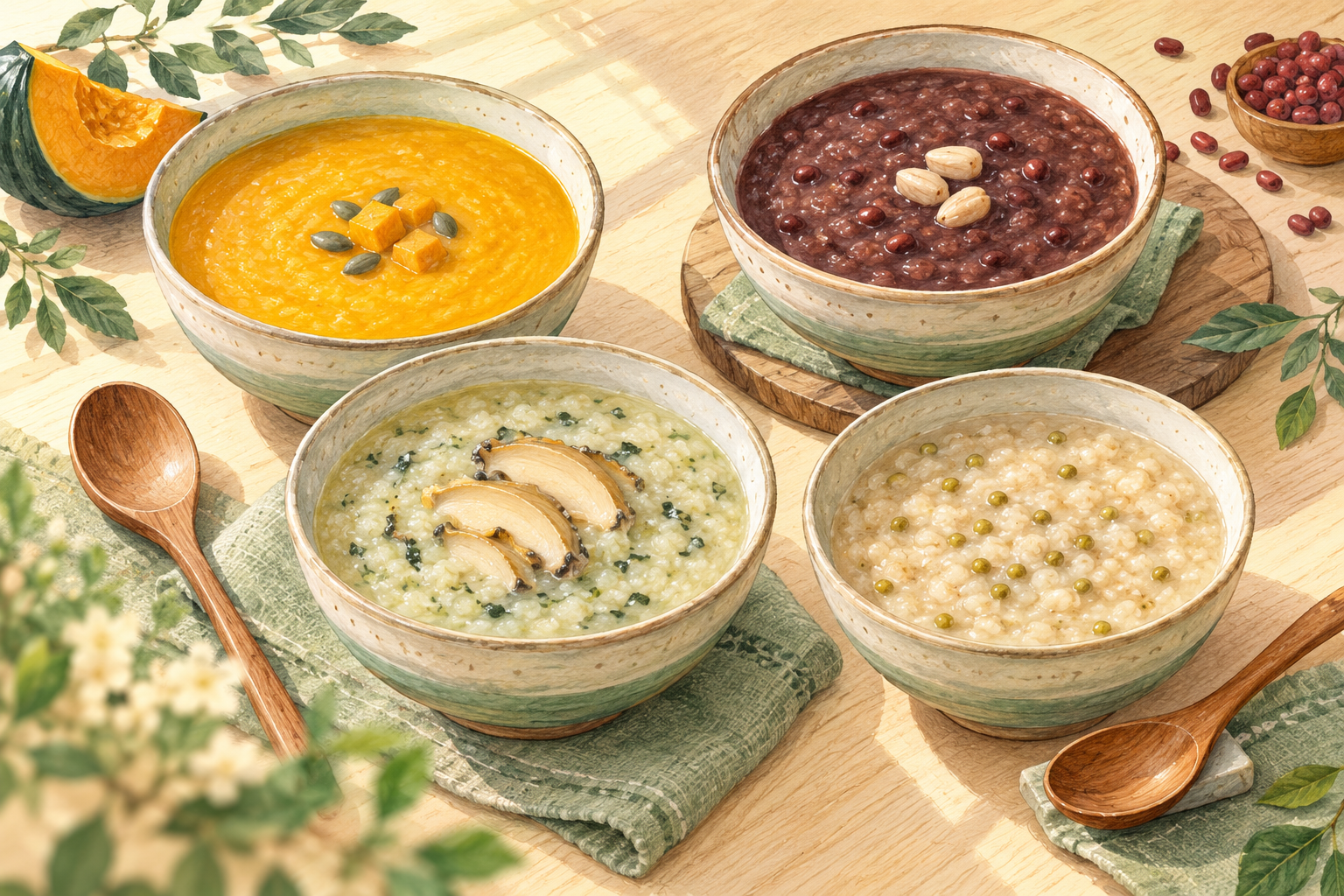
Choose Korean juk by flavor before choosing a shop
In Korea, juk covers different porridge preparations, so the useful first question is whether you want a sweeter bowl, a bean flavor or a seafood-based meal.
This guide narrows that choice to four named dishes described by the Korea Tourism Organization. It is not a ranking of restaurants or a claim about what visitors from a particular country enjoy. If you already like pumpkin soup, soft bean dishes or seafood rice, use those familiar preferences as starting points rather than expecting an identical dish.
The official descriptions linked below were published on 19 October 2023 and checked again on 16 October 2026. They explain typical preparations; they do not establish today's menu, price or ingredients at any restaurant.
Compare four Korean porridges by taste and texture
These four Korean juk names distinguish the main flavor direction, but the restaurant must confirm the actual recipe.
| Dish | Starting point for your taste | Question before ordering |
|---|---|---|
| Hobakjuk · 호박죽 Pumpkin porridge | A soft, sweeter pumpkin preparation | Is it a small starter, dessert or full portion? |
| Patjuk · 팥죽 Red bean porridge | Soft red beans and rice; sweetness depends on the preparation | Is this version sweetened, and what is added on top? |
| Nokdujuk · 녹두죽 Mung bean porridge | A milder bean flavor; KTO describes it as less sweet than red bean porridge | What broth and seasonings are used? |
| Jeonbokjuk · 전복죽 Abalone porridge | A seafood-and-rice option, with flavor affected by the use of abalone innards | Are the innards used, and what other seafood ingredients are included? |
Try hobakjuk if you enjoy a softer pumpkin flavor
Korea Tourism Organization describes hobakjuk as cooked pumpkin combined with sweet rice flour, producing a soft porridge that can be served as a starter or dessert.
That makes it worth considering if your preference is a sweeter, spoonable dish rather than grilled meat or chewy noodles. It does not mean every serving replaces a full meal. Ask about the portion and whether the menu price refers to a separate order or part of a set. See the official pumpkin porridge description.
Compare patjuk and nokdujuk if you like bean-based dishes
KTO describes patjuk as red beans cooked with rice, while its nokdujuk entry describes mung beans and rice with a milder, less sweet flavor.
For a sweeter direction, ask about the shop's patjuk; for a less sweet bean option, ask about nokdujuk. These are preference-based suggestions, not a promise that a particular recipe contains no added sugar. A smooth bowl, visible rice grains and chewy additions can feel quite different, so check texture as well as sweetness. The source descriptions are red bean porridge and mung bean porridge.
Ask about abalone innards before ordering jeonbokjuk
KTO's jeonbokjuk description says abalone innards can change both the color and flavor of the rice porridge.
If you enjoy seafood but prefer a less pronounced flavor, ask whether the restaurant uses the innards and whether an alternative preparation is possible. Do not assume a kitchen can change a prepared base. This is an ingredient preference, not a judgment that one version is better. Read the official abalone porridge description. Abalone is part of this dish, so it is not a plant-based option.
Use three questions when ordering juk in Korea
Before ordering juk in Korea, confirm sweetness, portion and the complete preparation rather than choosing only by the photograph.
- “Is this sweet?” — 단맛이 나나요?
- “Is this one serving?” — 1인분인가요?
- “What ingredients are in it?” — 어떤 재료가 들어가나요?
These are ordinary ordering prompts, not an allergy communication card. Ask separately about stock, oil, seasoning, toppings and accompanying side dishes when they matter to your diet. A pumpkin or bean name does not establish vegan ingredients or religious certification. Confirm relevant certification separately if required. For an allergy, follow a clinician's plan and obtain the specific ingredient and preparation information you need; removing a visible garnish is not a safety assessment.
Korean porridge questions before your first bowl
For a first juk meal in Korea, the recipe and portion are more useful than assumptions about the dish category.
Is all juk savory?
No. Pumpkin and red bean preparations can lean sweet. Ask about the version being served.
Does porridge mean breakfast only?
The name does not establish a shop's serving hours. Check the exact branch and whether juk is available when you plan to visit.
Does a soft texture make it suitable for a medical diet?
No. This is a taste and ordering guide, not medical advice. Ask your clinician about dietary requirements rather than using texture as a health claim.
How much should I budget?
No current restaurant price was verified for this guide. Check the full portion or set price on the current menu before ordering.
Continue planning your meals in Korea
Use these Korea guides for the next step, without treating any dish suggestion as a dietary guarantee.